Indian Security Forces Shoot Down Three Pakistani Drones Near Punjab Border: Ensuring National Safety

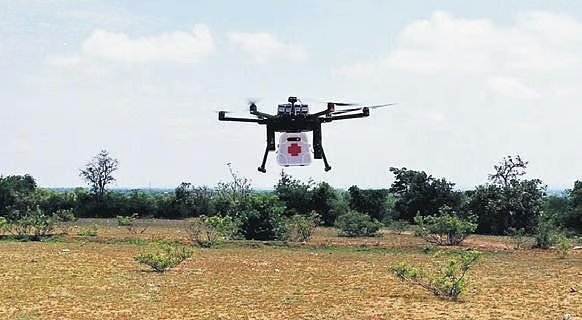
India’s border security remains a critical component of national defense, and recent developments along the Punjab frontier have highlighted the vigilance of Indian security forces. In a swift and decisive action, Indian forces intercepted and shot down three Pakistani drones attempting to cross into Indian territory. This operation not only prevented potential smuggling or surveillance but also sent a clear message about India’s readiness to secure its borders.
This incident raises important questions about drone technology, cross-border security, and India’s strategic preparedness. In this blog, we explore the details of the operation, the threats posed by drones, India’s response mechanisms, and the broader implications for national security.
The Incident: Drones Intercepted at the Punjab Border
According to official sources, three drones originating from Pakistan were detected near the Punjab border. The drones were suspected to be engaged in smuggling operations or intelligence gathering. Indian security forces responded quickly, employing advanced radar and anti-drone systems to intercept the unmanned aerial vehicles.
Key Highlights of the Operation:
-
Detection: High-tech radar systems identified the drones approaching Indian airspace.
-
Interception: Security forces used electronic countermeasures and anti-drone technologies to bring them down safely.
-
Outcome: All three drones were successfully neutralized without causing civilian harm.
-
Investigation: Authorities recovered drone debris to study their origin, payload, and operational mechanisms.
This operation demonstrates the readiness and coordination of India’s border security apparatus.
Why Drone Threats Are Rising in India
The use of drones for cross-border activities has surged in recent years. Drones present new challenges for national security due to their:
1. Size and Speed
Small, fast-moving drones can evade traditional detection systems, making them harder to spot.
2. Payload Capacity
Drones can carry weapons, drugs, or surveillance equipment across borders.
3. Remote Operation
Operators can control drones from a distance, often using encrypted communication channels, reducing the risk of capture.
4. Low Cost
Compared to conventional weapons, drones are cheaper and easier to deploy, making them attractive for smuggling or espionage.
5. Surveillance Capabilities
High-resolution cameras and sensors allow drones to gather sensitive information, including troop movements and infrastructure details.
India has witnessed similar drone incursions in border areas like Jammu & Kashmir, highlighting a growing trend in asymmetric warfare and cross-border intelligence gathering.
Security Forces’ Response Mechanisms
India has developed a robust set of tools and strategies to counter drone threats. The recent interception near Punjab showcases these capabilities:
1. Advanced Radar Systems
Modern radar can detect low-flying, small-sized drones in real-time, providing early warning to security forces.
2. Electronic Countermeasures
Jamming devices can disrupt communication between the drone and its operator, forcing it to land or crash safely.
3. Anti-Drone Weaponry
In addition to electronic measures, security forces use physical methods such as net guns, laser systems, and controlled interceptions to neutralize drones.
4. Rapid Response Teams
Highly trained border security personnel can quickly reach the drone’s projected path to ensure civilian safety.
5. Forensic Recovery
Debris from intercepted drones is analyzed to identify origin, technology, and operator patterns, helping authorities prevent future incidents.
Implications for National Security
This incident is not just a local event—it has broader implications for India’s national security strategy:
1. Strengthening Border Vigilance
The Punjab border, being a major transit route, is now receiving enhanced monitoring through drones, sensors, and patrols.
2. Preventing Smuggling and Illicit Activities
Drones have been used for drug smuggling, arms transport, and even cross-border terrorism. Intercepting them safeguards public safety.
3. Demonstrating Military Readiness
The successful interception sends a signal to potential adversaries that India is prepared to counter modern technological threats.
4. Policy and Technology Push
Incidents like this encourage government investment in anti-drone technology, including AI-enabled detection systems, radar upgrades, and electronic warfare tools.
5. Regional Stability
By controlling incursions, India maintains stability along the border and reduces the likelihood of escalation with neighboring countries.
Challenges in Countering Drone Threats
Despite successes, drone threats present ongoing challenges:
1. Evolving Technology
Adversaries continuously upgrade drones, using stealth materials, longer battery life, and encrypted communication channels.
2. Legal and Regulatory Gaps
Drone laws exist, but cross-border drones are outside legal jurisdiction, making prevention more complex.
3. Civilian Risk
Neutralizing drones in populated areas carries the risk of collateral damage.
4. Detection Limitations
Small drones flying at low altitudes are often difficult to detect with conventional radar systems.
Addressing these challenges requires continuous innovation, training, and policy support.
The Role of Punjab in India’s Border Security
Punjab shares a sensitive border with Pakistan, historically prone to security challenges. While much focus is often on the Jammu & Kashmir region, incidents in Punjab demonstrate that border vigilance must be all-encompassing, covering:
-
Smuggling of narcotics and contraband
-
Cross-border surveillance and intelligence gathering
-
Preventing infiltration of extremist elements
-
Securing rural and urban border zones
Recent drone interceptions indicate that Indian security forces are adapting to modern threats and expanding surveillance beyond traditional hotspots.
Technological Advancements in India’s Anti-Drone Measures
India is increasingly investing in domestic and imported anti-drone technologies, including:
-
Radar detection systems: Real-time tracking of UAVs
-
Signal jamming devices: Disrupt drone communication
-
Laser-based neutralization: Physically disables drones without collateral damage
-
AI-enabled systems: Predicts drone flight paths and alerts authorities
-
Drone-for-drone defense: Using interceptor drones to capture or neutralize intruding UAVs
Such investments are crucial as drone threats are expected to rise globally and regionally in the coming years.
What This Means for Citizens
While these are primarily security operations, they indirectly impact ordinary citizens:
-
Safer borders mean reduced risk of cross-border crime or terrorism.
-
Increased investment in technology can create jobs and innovation in defense and surveillance sectors.
-
Awareness about drones is rising, prompting communities to report suspicious UAV activity.
The incident demonstrates how national security intersects with everyday safety and technological advancement.
Conclusion: Vigilance and Preparedness Are Key
The interception of three Pakistani drones near the Punjab border is a testament to India’s vigilance, strategic foresight, and technological capabilities. Security forces not only prevented potential smuggling or surveillance but also sent a strong message: India is ready to tackle modern threats using a combination of technology, training, and rapid-response strategies.
As drone technology evolves, India’s commitment to border security must keep pace. Investments in radar systems, AI-enabled detection, electronic countermeasures, and public awareness programs are essential for maintaining safety. Incidents like this highlight the importance of proactive measures rather than reactive responses.
For citizens, this operation reassures that India’s borders are protected and that security forces remain committed to safeguarding the nation against both traditional and emerging threats.
India’s experience shows that vigilance, innovation, and preparedness are the keys to maintaining national security in an era of technological warfare.